Fon phun muang - Lao folk dance
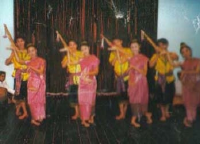
The Lao folkloric tradition incorporates a wide repertoire of folk dances (
fon phun muang), some based on ancient animist rituals, some developed in celebration of the passing of the seasons and others adapted from courtly performance genres.
As in neighbouring Thailand and Cambodia, one of the most popular social dances in Laos is the celebrated lam vong (circle dance), in which couples dance circles around one another until there are three circles in all - a circle danced by the individual, a circle danced by the couple, and a circle danced by the whole crowd. Featuring delicate and precise movements of the hand, the lam vong is danced to a slow rhythm performed by an ensemble led by the khene. Subtle differences characterise the style of lam vong performed in different regions.
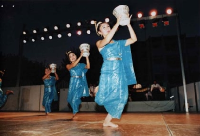
Often performed along with the recital of a traditional Lao greetings poem, the
fon uay phone welcoming dance originated in the royal palace but subsequently became popular amongst the common people.
Similar courtly origins are attributed to the fon sithone manora (which depicts the romantic tale of the eponymous half-bird, half-human heroine), fon sang sinxay (based on the Sinxay epic) and the candle dance fon tian, which is believed to have originated in neighbouring Lanna.
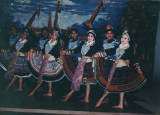
Other important folk dances include the welcoming dance
fon baci su khuan which is performed in conjunction with the
baci ceremony (see
Religion), the graceful southern female dance
fon tangwai (performed to the accompaniment of
lam tangwai), and the male martial arts dance
fon dab.
Over the past few decades efforts have also been made to choreograph various traditional ethnic minority dances, including the Hmong New Year dance fon bun kin chieng and the Khmu courtship dance fon pao bang.


