Mask making
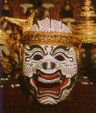
Masks were used for performances of
lakhaon khaol in the Royal Palace in performances of the
Reamker as early as the 13th century. They were used for performances and receptions for important visitors at the Royal Palace.
There are three main kinds of masks, all derived from the Reamker repertory, representing monkeys, giants and humans.
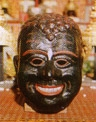
The masks display a high level of technical and artistic skill, being moulded from papier mache onto a clay form, then protected with resin glue and painted in intricate detail.
In earlier days, the mask-maker was also a performing artist. Today, mask-makers need not know how to perform, but mask-making is still closely tied to performance rituals. Masks are given respect and are considered sacred in performances. Offerings of incense and flowers are made to pay respect in the making of masks, especially when the holes of the eyes are made. There is a belief that magical charms can be put into the mask that will make it come alive during the performance.
Mask making was incorporated into the curriculum of the
Faculty of Plastic Arts (today part of the Royal University of Fine Arts) in 1919 and is still taught there today.


